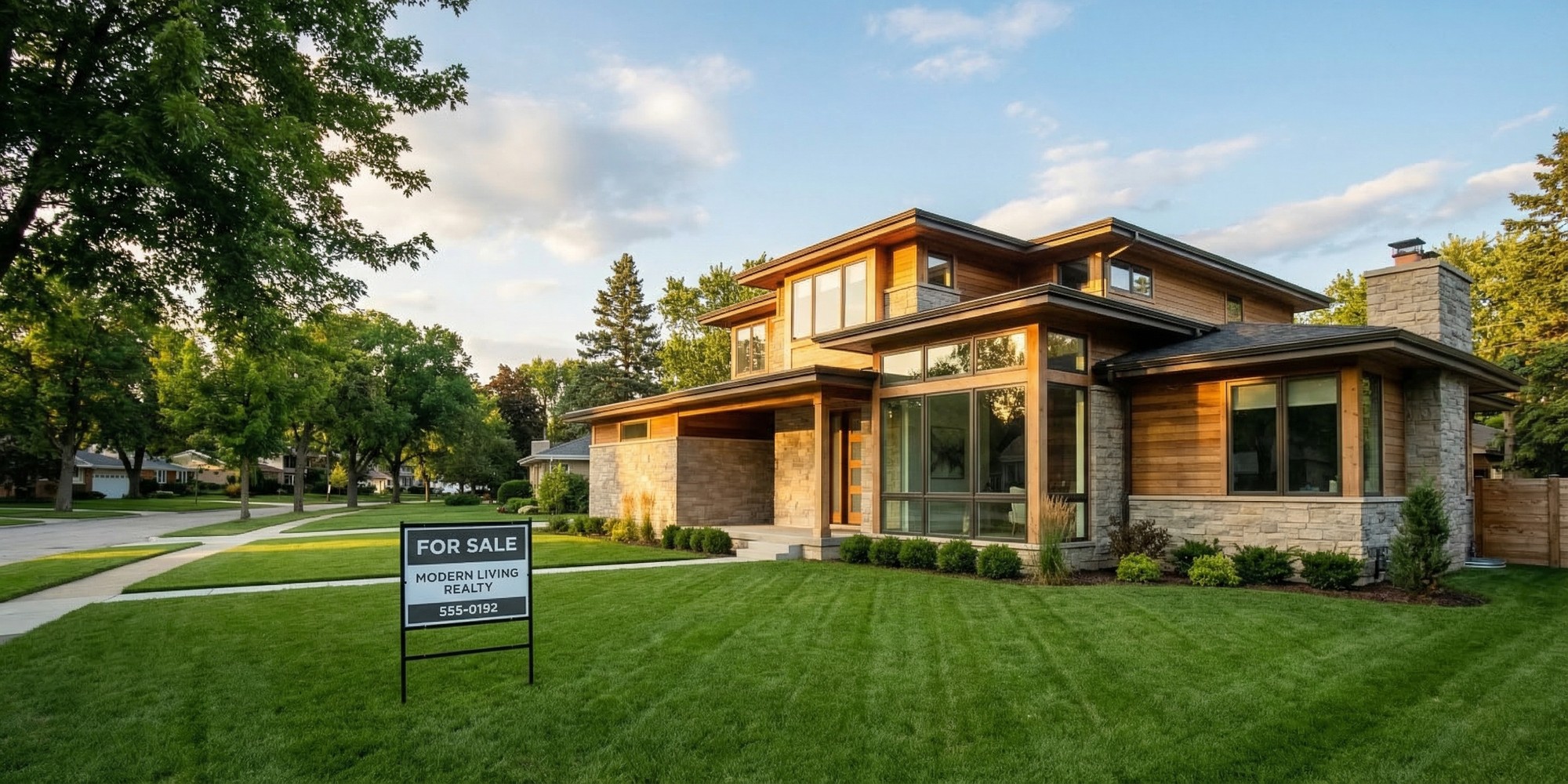
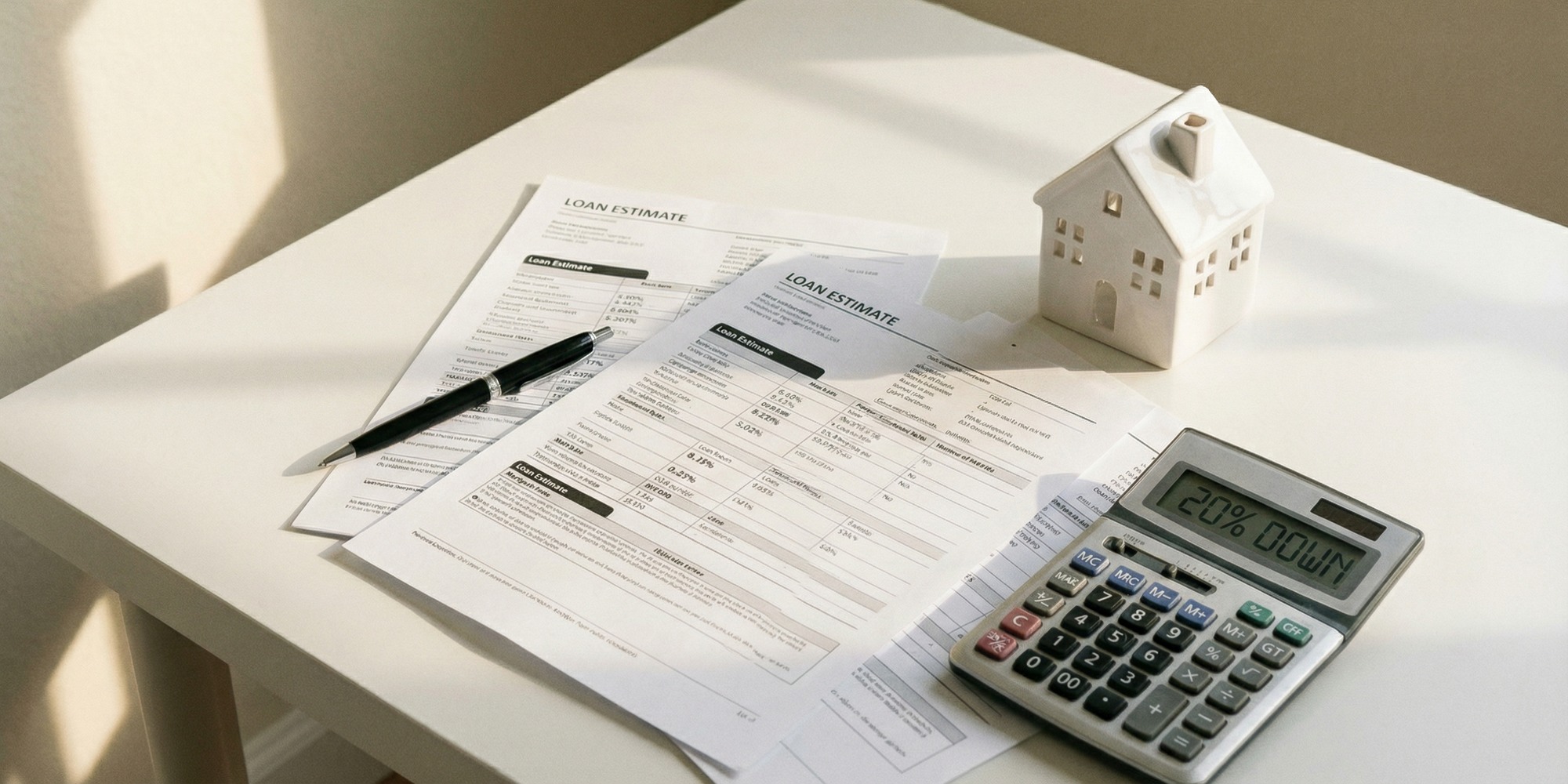
The median age of a first-time homebuyer in the United States just hit 40 years old. Let that land. The institution that once marked the end of your twenties has been pushed a full decade later, and the share of all home purchases made by first-timers has fallen to 21% — an all-time low, according to the National Association of Realtors' 2025 Profile of Home Buyers and Sellers. This isn't a blip. It's a structural crisis in entry-level housing access, and it's getting worse the longer people wait.
This week the 30-year fixed rate ticked up to 6.38% (Freddie Mac Primary Mortgage Market Survey, week of March 26, 2026) — up 16 basis points from the prior week's 6.22% and reversing a brief dip that had rates flirting with 6% territory in early February. Meanwhile, the Senate passed a major housing supply bill 89–10. Inventory is rising for the 28th consecutive month. And down payment assistance programs are quietly expanding to cover buyers who thought they made too much to qualify.
What 6.38% Actually Costs You
There's a mental trap first-time buyers fall into: treating the current rate as a number to be endured until something better comes along. The real comparison isn't "6.38% vs. my dream rate." It's 6.38% vs. what you'd pay if you'd waited differently.
Here's the actual math on a $400,000 home with 10% down ($360,000 loan):
| Rate Scenario | Monthly P&I | vs. Today | Note |
|---|---|---|---|
| 7.00% (spring 2025) | $2,396 | +$149/mo more | Where rates were a year ago |
| 6.38% (today) | $2,247 | — | Current market rate |
| 6.00% (recent low) | $2,158 | −$89/mo | Brief Feb 2026 dip |
| 5.50% (hypothetical) | $2,043 | −$204/mo | No clear path to this near-term |
Today's buyer is already $149/month better off than a buyer who locked in at spring 2025 rates of 7.00%. That's $1,788 per year in savings, baked in on day one. Yes, rates at 5.50% would save another $204/month — but here's what the "wait for 5.50%" math actually looks like: if you wait six months and home prices rise even 2% (a conservative projection given the Realtor.com forecast), your $400,000 target home costs $408,000. The price increase adds roughly $50/month to your payment permanently. You've given back most of that savings before you even close.
The cost of waiting isn't just in the monthly payment — it's in the equity clock that starts the day you buy. Six months of renting at $2,000/month is $12,000 toward nothing.
The Policy Tailwind First-Time Buyers Shouldn't Ignore — But Also Shouldn't Overweight
On March 13, 2026, the U.S. Senate passed the 21st Century ROAD to Housing Act by a remarkable 89–10 bipartisan margin. Co-sponsored by Senators Tim Scott and Elizabeth Warren — not a pair you see agreeing on much — the bill targets the supply-side root cause of the affordability crisis.
The provisions most relevant to buyers:
- Institutional investor restrictions: Section 901 bars entities owning 350 or more single-family homes from purchasing additional properties. This removes a meaningful category of competition from the entry-level market.
- Manufactured housing reform: Streamlined construction standards are projected to reduce costs by approximately $10,000 per unit — potentially opening up more affordable entry-level inventory.
- Zoning incentive grants: Federal dollars tied to local zoning reform, designed to unlock supply in high-cost metros over the medium term.
- NEPA streamlining: Faster environmental review for new housing projects, which is a genuine bottleneck in many states.
"This legislation represents a rare convergence of left and right on housing policy — acknowledging that the problem is fundamentally about supply and removing barriers that government itself created." — Senate Banking Committee release, March 13, 2026
The bill still needs to pass the House, where its path is less certain. The White House OMB has issued a statement of strong support. Our take: don't buy because of this bill. Supply bills take years to translate into actual homes. The manufactured housing cost reduction is real but won't show up in your local market this quarter. What the bill signals, however, is that both parties have agreed the crisis is a supply problem — which means more relief is coming, not less. That's a reasonable long-term backdrop for buyers who are on the fence.
Down Payment Assistance: The Underused Tool
Here's something most first-time buyers get wrong: they assume they earn too much for down payment assistance. In 2026, that assumption is increasingly false.
Housing finance agencies across the country have been quietly raising income thresholds for DPA programs — specifically to capture the "missing middle" of buyers who earn too much for low-income programs but not enough to absorb a 20% down payment on a $400,000+ home. A few notable expansions:
- Illinois IHDAccess Home: Up to $15,000 in down payment and closing cost assistance, income limits raised in March 2026 to reflect area median income adjustments.
- Palm Beach County Homebuyer Match Pilot: Up to $50,000 per qualified applicant — a program that has drawn significant interest and has limited slots.
- State-level programs in nearly every state have seen similar expansions (source: Washington Post, March 5, 2026).
Beyond state programs, two conventional loan options deserve more attention than they typically get from first-time buyers:
- Fannie Mae HomeReady: 3% down, conventional financing, PMI that's cancellable once you reach 20% equity. Requires a homebuyer education course. For credit scores above 720, this is often a better long-term deal than FHA.
- Freddie Mac Home Possible: Same structure, same 3% down minimum. The PMI cancellation is the key advantage over FHA, which charges mortgage insurance for the life of the loan if you put down less than 10%.
If your credit score is 720 or above, we'd encourage you to run the HomeReady or Home Possible numbers against FHA before assuming FHA is your only option. The difference over a 7-year hold can be meaningful. If your score is below 680, FHA's more lenient underwriting may still be the right call — but run both scenarios with your lender. For a deeper dive on this comparison, see our FHA vs. Conventional guide for first-time buyers.
Your Spring 2026 Playbook: Three Specific Actions
Enough context. Here's what to actually do:
1. Get pre-approved before April 12th. Realtor.com's seasonal analysis identifies the week of April 12–18, 2026 as the statistical peak of buyer competition for the year — the week when listing activity, buyer traffic, and bidding pressure all converge. Pre-approval is not a commitment to buy. It is leverage. A pre-approved buyer can move within days on the right property. An unverified buyer cannot compete in that environment. Use this window of lower competition (right now, before spring fully kicks in) to get your financing in order.
2. Search your state HFA for DPA programs before assuming you don't qualify. The National Council of State Housing Agencies maintains a directory at ncsha.org. Input your household income and target purchase price. You may be surprised. Income limits in many markets have risen to 100–120% of area median income — that covers a $90,000 household income in most metros.
3. Ask your lender to run FHA vs. conventional comparison numbers for your credit profile. Not a verbal summary — actual loan estimates (the standardized CFPB form) for both. The CFPB's Owning a Home tool can help you understand what you're comparing. The difference between loans is in the PMI structure and MIP charges, not just the rate. Those numbers add up fast over five to seven years.
Active listings nationally are up 7.9% year-over-year — 914,860 active as of February 2026 (Realtor.com). Median list prices are down 2.1% year-over-year. The 2026 conforming loan limit sits at $832,750 nationally, meaning most buyers in most markets can access conventional financing without jumping to a jumbo loan. These are better conditions than first-time buyers have had in several years. The window is open. The question is whether you'll walk through it.
For more on what's driving rates right now and what it means for your timing, read our Rate Education articles — particularly our breakdown of how the 10-year Treasury and mortgage rate spread affects what you'll actually pay.